

Introduction
Packaging costs include more than film, cartons, and strapping. Labor, storage, equipment, freight dimensions, damage, rework, and customer returns can be equally important. The best way to reduce packaging costs is to improve the complete packaging system rather than remove material blindly.
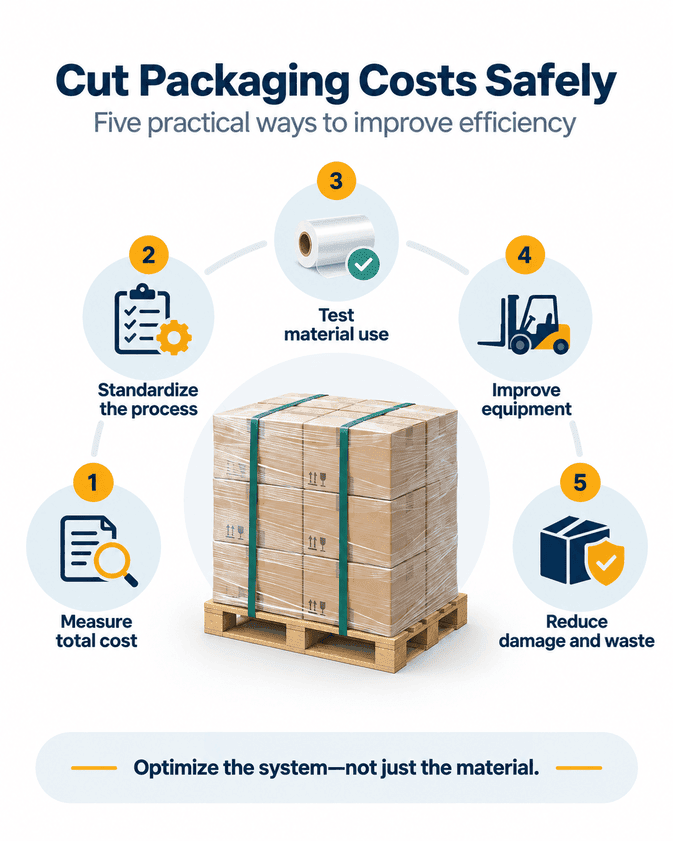
1. Measure total cost
Compare material price with consumption, application time, equipment maintenance, product damage, repacking, disposal, and freight impact. A stronger film may cost more per roll but require fewer wraps. A right-sized carton may reduce both corrugated material and dimensional-weight charges.
Establish a baseline for material used per shipment, labor minutes, breakage, damage, and returns before changing the process.
2. Standardize repeatable packaging methods
Unclear specifications encourage operators to overpack. Create tested standards for common loads that define pallet configuration, wrap pattern, strap quantity, edge protection, and acceptance criteria.
Use photos or diagrams for complex loads, train every shift, and audit against the same criteria. Standardization reduces material variation, picking errors, and unnecessary stock-keeping units without forcing one package onto every product.
3. Test material reductions before approving them
The target is not the thinnest film or fewest straps. It is the minimum verified package that survives expected handling. Test one variable at a time, such as film gauge, pre-stretch, wrap count, strap tension, carton size, or void fill. Evaluate the full distribution cycle, including vibration, braking, stacking, humidity, and storage time. Document the approved material, machine settings, application method, and test results.
4. Improve equipment and ergonomics
Packaging labor is often lost through walking, waiting, manual cutting, rework, and inconsistent application. Move supplies closer to workstations and consider tools such as strapping machines or stretch wrappers when volume justifies the investment. Better work height, dispenser placement, and mechanical assistance can improve productivity while reducing repetitive strain and injury risk.
5. Reduce damage, waste, and freight volume
Review damage by product, route, carrier, package format, and failure mode. Determine whether the cause is impact, vibration, compression, moisture, shifting, or poor handling before adding more material.
Right-size cartons and improve pallet patterns to reduce empty space. Consolidate compatible packaging sizes, use appropriate edge protection, and assess material recovery options in the destination market.
Conclusion
Sustainable packaging cost reduction comes from measurement, standardization, controlled testing, efficient equipment, and fewer failures. The goal is a safe, repeatable package that uses the right amount of material for the real distribution environment.